Mental Health Assessment: The Process, The 5 P's & What to Expect
Thinking about a mental health assessment can feel daunting. You might be wondering what it involves, what kinds of questions you'll be asked, and what happens with the results. However, this process is not a test you can pass or fail. Instead, it is a collaborative step toward understanding your mind and finding the right support. This guide will demystify the entire process for you.
We will explore the core components of a formal evaluation, explain the "5 P's" framework professionals use, and clarify the crucial difference between a clinical diagnosis and an online screening. For example, understanding your specific thought patterns is a key part of this journey, which is why many start by exploring a comprehensive guide on OCD symptoms.

What Exactly Is a Mental Health Assessment?
A mental health assessment is a structured evaluation conducted by a qualified professional, like a psychologist, psychiatrist, or licensed therapist. Its primary goal is not just to label a condition but to build a complete picture of your emotional well-being, challenges, and strengths. Think of it less like a final exam and more like creating a detailed map of your inner world.
More Than Just a Diagnosis: A Holistic View
While an assessment can lead to a diagnosis (such as anxiety, depression, or OCD), its purpose is much broader. A professional uses this process to understand how your thoughts, feelings, and behaviors interact. Furthermore, they explore how these patterns affect your daily life, from your job and relationships to your sleep and overall health. The ultimate aim is to identify areas where you might need support and to create a personalized care plan.
When Is an Assessment Recommended?
Typically, a mental health assessment is recommended when you experience persistent symptoms that interfere with your happiness and daily functioning. If you notice ongoing changes in your mood, thinking, or behavior that you can't explain, an evaluation can provide clarity. These signs might include:
- Feeling sad, anxious, or "empty" for most of the day, nearly every day.
- Losing interest in activities you once enjoyed.
- Experiencing intrusive thoughts or compulsive behaviors.
- Having significant trouble sleeping or concentrating.
- Facing challenges in maintaining relationships or work responsibilities.
The Core Components: What’s Included in the Process?
A comprehensive mental health assessment is not a single event but a multi-faceted process. It combines conversation, observation, and sometimes standardized questionnaires to gather a wide range of information. Here is what you can typically expect.
The Clinical Interview: Discussing Your History
The foundation of any assessment is a detailed conversation. A clinician will ask you about your current concerns, personal history, family background, and lifestyle. This helps them understand the context of your experiences. For instance, questions may cover your childhood, education, relationships, and any major life events. Be as open and honest as you can, as this information is crucial for an accurate evaluation.
The Mental Status Examination (MSE): How Professionals Observe
During the interview, the professional will also conduct what is known as a Mental Status Examination (MSE). This is not a formal test but a structured way of observing your appearance, behavior, speech, and emotional state. For example, they will pay attention to your mood, how you express thoughts, and your general awareness. It provides valuable, real-time insights that complement what you share verbally.
Standardized Scales: Using Tools like PHQ-9 or OCI
To get objective data, clinicians often use scientifically validated questionnaires or scales. You might be asked to complete a checklist about symptoms of depression (like the PHQ-9) or anxiety. For specific concerns like obsessive-compulsive patterns, they may use a tool like the Obsessive-Compulsive Inventory (OCI). These tools help quantify your symptoms and track progress over time. In fact, many people first explore these patterns with an online OCD test to organize their thoughts.
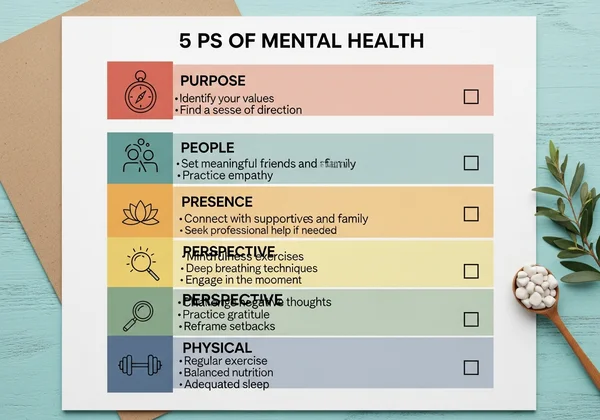
Decoding the "5 P's" of Mental Health Formulation
To make sense of all the information they gather, many clinicians use a framework known as the "5 P's." This model helps them organize your story into a coherent narrative, moving beyond a simple label to understand you as a whole person.
Presenting & Predisposing: The "Why Now" and "History"
- Presenting Problem: This is the main reason you are seeking help—the "why now." It covers your current symptoms, their intensity, and how they affect your life.
- Predisposing Factors: These are the historical elements that might make you more vulnerable to certain challenges. This can include your genetic background, family history of mental illness, or early life experiences.
Precipitating & Perpetuating: Triggers and Cycles
- Precipitating Factors: These are the specific triggers or events that may have started your current difficulties. For example, it could be a stressful life change, a loss, or a new environment.
- Perpetuating Factors: These are the ongoing factors that keep the problem going. This might include unhelpful coping mechanisms, social isolation, or negative thought patterns.
Protective Factors: Identifying Your Strengths
Finally, and most importantly, the assessment identifies your Protective Factors. These are your strengths, resources, and support systems that help you cope and build resilience. This could be a strong network of friends, a passion or hobby, personal determination, or positive coping skills you already possess.
Clinical Diagnosis vs. Online Screening: Knowing the Difference
In the digital age, it is important to understand the distinction between a formal clinical diagnosis and a quick online screening. While both have value, they serve very different purposes.
The Role of Professional Diagnosis
A professional diagnosis is the "gold standard." It is a comprehensive conclusion reached by a licensed clinician after a thorough mental health assessment, including the interview and MSE we discussed. Consequently, this diagnosis is used to create official treatment plans, prescribe medication if necessary, and for insurance purposes. It is a detailed, nuanced, and legally recognized process.
The Power of Online Screening
Online screening tools, on the other hand, are designed to be an accessible first step. They are educational resources that can help you identify potential symptoms and patterns of concern. Because they are anonymous and immediate, they provide a low-pressure way to explore your feelings and decide if you should seek professional help.
Accuracy & Limitations: What an Online Test Can Tell You
An online test cannot provide a medical diagnosis. However, a well-designed screening tool can be highly accurate at identifying specific symptom patterns that are associated with certain conditions. It can empower you with language to describe your experiences and give you a structured report to share with a doctor or therapist. Think of it as a tool for insight, not for diagnosis.
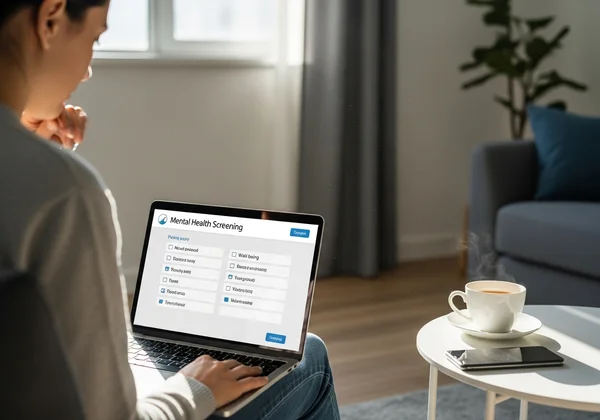
Starting Your Journey: The Value of Self-Reflection Tools
Now that you understand the formal process, you might be wondering where to begin. For many, the idea of booking an appointment immediately feels overwhelming. This is where self-reflection tools can be incredibly valuable.
Why Start with a Confidential Screening?
Starting with a confidential online screening offers a safe and private space to explore your thoughts and feelings without commitment. There is no pressure and no judgment. It allows you to gather information about yourself at your own pace, helping you feel more prepared and less anxious if you decide to speak with a professional later.
Focusing on Specific Symptoms (e.g., Intrusive Thoughts)
General mental health screeners are helpful, but sometimes your concerns are more specific. If you are struggling with recurring, unwanted thoughts or repetitive behaviors, a specialized tool can offer deeper insights. It helps you focus on the exact patterns that are causing you distress.
Ready to gain some clarity? Our AI-powered assessment is an educational tool designed to help you understand your symptoms. It provides a personalized report that can be a helpful starting point for self-discovery or a conversation with a professional.
Start Free Screening (Note: This tool is for educational purposes and is not a substitute for a professional diagnosis.)
Practical Tips: How to Prepare for an Evaluation
If you decide to move forward with a formal mental health assessment, a little preparation can make the process feel much smoother and more productive. Here are a few simple steps you can take.
Creating a Symptoms Log
Before your appointment, spend a few days jotting down your thoughts, feelings, and behaviors. Try to be specific.
- What are the symptoms? (e.g., racing thoughts, low mood, repetitive actions)
- When do they occur? (e.g., at night, in social situations)
- How long do they last?
- How much do they impact your day? (Use a scale of 1-10)
Medical History & Medication List
Your physical health is closely linked to your mental health. Prepare a list of any medical conditions you have, as well as any medications or supplements you are currently taking, including dosages. Also, be ready to discuss your family's medical and mental health history.
Empowerment Through Understanding
Ultimately, a mental health assessment is a powerful act of self-care. It is a proactive step toward gaining clarity, identifying your needs, and building a path toward feeling better. Whether you start with a confidential online screening or book an appointment with a professional, the goal is the same: empowerment through understanding.
After the evaluation is complete, the clinician will discuss the findings with you. This conversation typically includes a summary of your strengths and challenges. If a diagnosis is made, they will explain what it means. Most importantly, you will collaborate on a "care plan," which outlines the recommended next steps. This could involve therapy, medication, lifestyle changes, or a combination of approaches. Remember, you are an active partner in this process, and a good care plan is one that you feel comfortable with. If you want to learn more, exploring different OCD test results can provide further context on how insights are generated.
Frequently Asked Questions
What are the "3 C's" of mental illness?
The "3 C's" are often used in the context of addiction and compulsive behaviors. They stand for: Compulsion (an overwhelming urge to do something), loss of Control (difficulty stopping the behavior), and continued use despite negative Consequences.
Is a mental health assessment confidential?
Yes, absolutely. Mental health professionals are bound by strict legal and ethical standards of confidentiality, such as HIPAA in the United States. Your information cannot be shared without your explicit consent, except in very specific situations involving risk of harm.
Do I need a referral to get an assessment?
This depends on your location and insurance plan. Some insurance providers require a referral from a primary care physician to see a specialist like a psychologist or psychiatrist. However, you can often see a licensed therapist or counselor without a referral.
How long does a typical assessment take?
A comprehensive initial assessment can take anywhere from 60 to 90 minutes. Follow-up sessions are typically shorter, around 45 to 50 minutes. In contrast, most online screening tools are designed to be completed in just 5 to 15 minutes.
Can an online test diagnose me?
No, an online test cannot provide a medical diagnosis. It is an educational screening tool designed to help you identify and understand potential symptom patterns. Only a qualified healthcare professional who has met with you can provide a formal diagnosis.