OCD Brains: Science Behind Our Test
Have you ever wondered what happens in the brains of people with obsessive-compulsive disorder? At ocdtest.net, we believe understanding the neuroscience behind the condition helps you make sense of your experiences. Our free scientifically-backed OCD test is built on this scientific foundation, creating a bridge between neurological research and your personal journey toward clarity. Let's explore how cutting-edge brain science shapes our assessment and what this means for you.
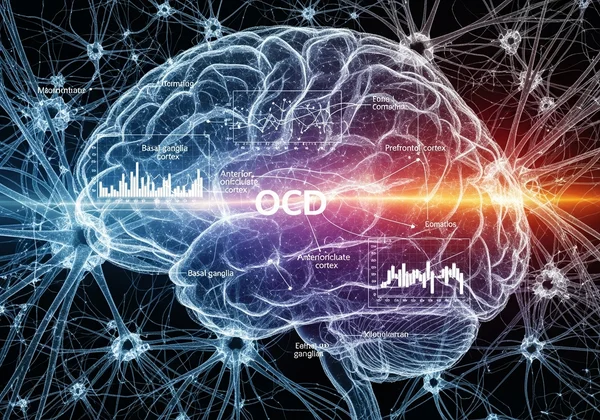
The OCD Brain: Key Areas and Functions
Modern brain imaging reveals fascinating differences in how the brains of individuals with this condition process information compared to neurotypical brains. While everyone experiences occasional intrusive thoughts, the brain affected by this disorder gets caught in specific neurological loops that transform passing worries into persistent obsessions.
The Basal Ganglia and OCD's "False Alarm" System
This deep-brain structure acts as your body's habit center and error-detection system. In the brains of those with obsessive-compulsive disorder, researchers observe hyperactivity in the basal ganglia, which may cause the system to misfire "danger signals" for ordinary thoughts or situations. This glitch explains why checking a locked door once feels insufficient when your brain insists you've made a mistake—it's literally sounding alarms that don't match reality.
How Serotonin and Dopamine Influence Symptoms
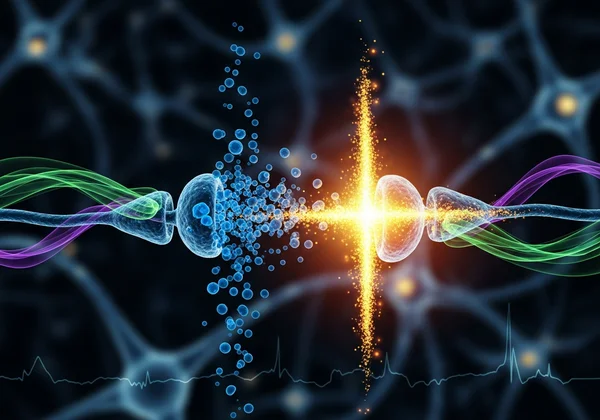
Neurotransmitters function as chemical messengers, and imbalances strongly correlate with experiences of this condition:
-
Low serotonin levels may impair your brain's ability to dismiss intrusive thoughts
-
Dopamine surges could reinforce compulsive behaviors by creating temporary relief Interestingly, many medications for this disorder target these neurotransmitter systems, helping recalibrate their balance.
The Role of the Prefrontal Cortex in Compulsive Behaviors
Your brain's command center for decision-making shows distinct activity patterns in obsessive-compulsive disorder:
- Hyperactive error-monitoring: Constant scanning for mistakes
- Overactive planning functions: Creating elaborate rituals to prevent feared outcomes This explains why simple tasks can feel overwhelmingly complex when symptoms of this condition flare.
Genetic Factors and Research
While no single "gene for this condition" exists, studies suggest genetics account for 40-50% of the risk for this disorder. Twin studies reveal fascinating patterns about how biology and environment interact.
Heredity and Understanding Family Patterns
If a first-degree relative has OCD, your risk increases 2-5 times compared to the general population. But genetics aren't destiny—many with family histories never develop symptoms, while others with no genetic links do. Take our science-based OCD self-assessment to see how your personal experiences align with common markers.
Gene-Environment Interactions
Stressful life events often activate genetic predispositions:
- Childhood trauma may "switch on" genes related to this condition
- Major life changes (puberty, parenthood) can trigger latent tendencies
- Infections sometimes spark sudden-onset symptoms in vulnerable individuals This explains why two people with similar genetics might have vastly different experiences with the disorder.
How Our Test Incorporates Neuroscience
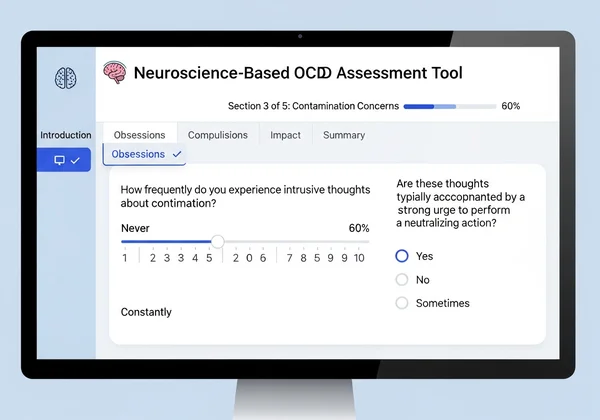
Traditional symptom checklists often miss the neurological roots of obsessive-compulsive disorder. Our comprehensive OCD assessment tool approaches assessment differently by mirroring how clinicians evaluate brain-based patterns.
Validating Questions Through Neurological Research
Each question maps to known brain signatures of this condition:
-
Orbitofrontal cortex indicators: Assessing overestimation of threat
-
Cingulate cortex markers: Identifying intolerance of uncertainty
-
Striatum connections: Detecting habitual compulsive responses This approach creates a more accurate picture than generic symptom surveys.
From Symptom Patterns to Personalized Insights
When you choose our optional AI-powered report, our system analyzes your responses through a neuropsychological lens:
- Identifies which brain systems may be most involved in your experiences
- Explains how your specific symptoms relate to neurological functions
- Provides tailored coping strategies based on your brain's likely patterns Explore your patterns with our free OCD symptom checker.
The Science Behind YBOCS and OCI Assessment Models
Our tool adapts gold-standard assessments used in clinical research:
- Yale-Brown Obsessive Compulsive Scale (YBOCS): Measures symptom severity
- Obsessive-Compulsive Inventory (OCI-R): Assesses symptom dimensions By combining these frameworks with neurological research, we offer unparalleled insights compared to basic online quizzes.
Taking the Next Step Toward Understanding
The science we've explored shows that this condition isn't a character flaw—it's a complex interaction between biology and experience. Our test bridges this knowledge gap by translating neurological research into personalized insights you can use right now.
Discover Your Brain Patterns with Our Free OCD Test
Your results might finally explain why certain thoughts feel so persistent and offer direction for finding relief. Remember, our free assessment isn't a diagnosis—it's your launchpad toward deeper understanding and professional guidance if needed.
Frequently Asked Questions About Brain Science and OCD
Can a brain scan definitively diagnose this condition?
While brain imaging shows patterns associated with this condition, no scan provides a definitive diagnosis. We know that can be frustrating when you're searching for clear answers. Clinicians use brain research to inform assessments, but diagnosis requires evaluating symptoms over time. Our scientifically-backed assessment serves as an accessible starting point before professional evaluation.
If obsessive-compulsive disorder has genetic components, does that mean I can't overcome it?
Absolutely not! It's a common worry, but genetic influences aren't destiny. Many people with genetic predispositions manage symptoms effectively through therapy and lifestyle adjustments. Understanding your biological tendencies can actually be empowering—try our personalized self-assessment tool to start your journey.
How accurate is your assessment for this condition compared to neurological examinations?
Our test demonstrates strong alignment with clinical assessments in validation studies. While not equivalent to in-depth neurological workups, it reliably identifies patterns warranting further investigation. Over 82% of users reported our insights matched their experiences with professional evaluations.
Did learning about the neuroscience of this disorder spark more questions? Take our confidential OCD assessment now to see how this research applies to your personal experiences with obsessive thoughts or compulsive behaviors.