OCD Test for Adults: Self-Assess Everyday Symptoms
Do you ever feel stuck in a loop of repetitive thoughts? Do you perform certain actions over and over, not because you want to, but because you feel you have to? For many adults, these experiences are a quiet, confusing struggle. You might wonder, "Are my habits and worries normal, or is it something more?"
This guide is here to help you find clarity. We'll explore the real symptoms of Obsessive-Compulsive Disorder (OCD) in adults, moving beyond common stereotypes. We'll also explain how a confidential screening tool can be a safe and insightful first step. Understanding your experiences begins with knowledge, and our goal is to empower you with it. You can begin this journey of self-discovery with our confidential online test today.
Understanding Adult OCD Symptoms Beyond Stereotypes
When most people think of OCD, they picture someone who is extremely neat or constantly washing their hands. While these can be symptoms, they represent only a small fraction of what OCD can look like, especially in adults. Adult OCD is often an invisible battle fought inside your own mind.
It's a mental health condition characterized by two core components: obsessions and compulsions. Understanding how they manifest in daily adult life—from the office to personal relationships—is the key to recognizing them.
Common Obsessions and Compulsions in Adult Life
Obsessions aren't just worries. They are unwanted, intrusive thoughts, images, or urges. These cause significant distress and anxiety. Compulsions are the repetitive behaviors or mental acts you feel driven to perform in response to an obsession. The goal of a compulsion is to reduce anxiety or prevent a feared event from happening.
Here are some common examples relevant to adult life:
-
Obsessions:
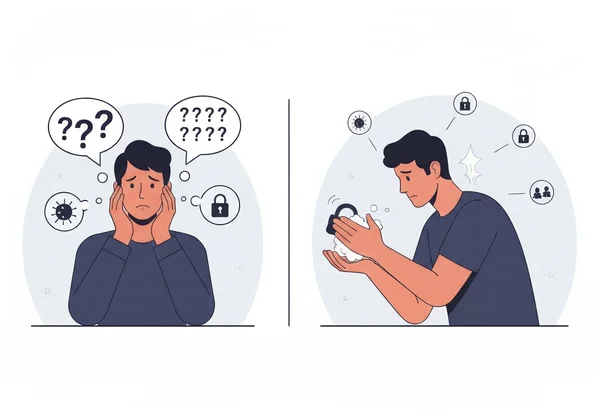
- Contamination Fears: Intense worry about germs from public transport, shaking hands, or using a shared keyboard at work.
- Responsibility/Harm: A nagging fear that you might have left the stove on, failed to lock the door, or sent an unprofessional email, potentially causing harm or disaster.
- Relationship Doubts (R-OCD): Constant, distressing doubts about your love for your partner, their love for you, or whether the relationship is "right."
- Unwanted Intrusive Thoughts (Pure O): Disturbing and unwelcome thoughts of a violent, sexual, or religious nature that go against your personal values.
- Symmetry and Order: An overwhelming need for things to be perfectly aligned, symmetrical, or "just right," causing distress when they are not.
-
Compulsions:
-
Checking: Repeatedly checking that doors are locked, appliances are off, or emails are free of typos, far beyond what is necessary.
-
Reassurance Seeking: Constantly asking partners, family, or colleagues for reassurance (e.g., "Do you still love me?" "Did I do that correctly?").
-
Mental Rituals: Silently repeating words, counting, or mentally reviewing events to "cancel out" a bad thought or ensure something bad doesn't happen.
-
Washing/Cleaning: Washing hands to the point they become raw, or excessively cleaning the house to remove potential contaminants.
-
Arranging: Spending significant time arranging objects until they feel perfectly in place.
-
Differentiating OCD from Everyday Worries or Habits
Everyone double-checks things sometimes. Everyone has a weird or worrying thought now and then. So, what makes it OCD? The difference lies in three key areas: distress, time, and interference.
Think of it this way:
An everyday worry might be, "I hope I did well on that presentation." You might feel a bit anxious, but you can move on with your day. An OCD obsession is, "What if I said something offensive in the presentation?" This thought loops for hours, causing intense anxiety. You might feel compelled to email attendees to apologize or mentally replay every word you said, disrupting your work and peace of mind.
Similarly, a habit is something you do automatically, like making coffee every morning. A compulsion is a demanding ritual. If you don't perform it, you feel overwhelming anxiety and a sense of impending doom. It isn’t a choice; it feels like a necessity for survival.
Taking an Accurate OCD Self-Test for Adults
If some of the symptoms described above resonate with you, you might be feeling uncertain about what to do next. Taking a structured self-test can be a valuable and clarifying step. It provides a private space to explore your experiences without judgment.
An online screening isn't about a scary label. It's about gathering info. It turns vague "something's wrong" feelings into clear patterns. This puts you more in control.
How Our Confidential Online OCD Test Works
Our goal here is to make this first step as simple and reassuring as possible. The process is straightforward, free, and completely confidential.
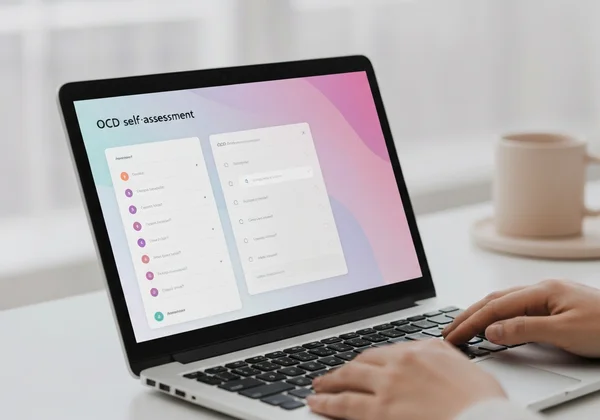
The test is built on the principles of scientifically recognized assessment tools used by mental health professionals, like the Obsessive-Compulsive Inventory (OCI). You'll be presented with a series of questions about thoughts and behaviors you may have experienced recently. Answer them honestly based on what feels true for you.
Once you complete the questions, you'll receive your results immediately. For those seeking even deeper understanding, we offer a unique option: an AI-powered personalized report. This report goes beyond a simple score. It provides tailored insights into your specific symptoms and how they might affect different areas of your life. Take the first step toward understanding your mind.
What Your Self-Assessment Results Mean for You
It is crucial to understand what your results are—and what they are not. An online test is a screening tool, not a diagnostic tool. It cannot tell you with certainty that you have OCD. Only a qualified healthcare professional, like a psychiatrist or psychologist, can provide an official diagnosis after a comprehensive evaluation.
So, what is the value of your results?
- They provide a baseline: The score gives you an idea of the severity level of your symptoms compared to established clinical data.
- They organize your experience: The results can help you put words to what you've been feeling, making it easier to think about and discuss.
- They empower your next step: You can take your results to a doctor or therapist as a starting point for a more productive conversation.
Think of the self-assessment as a thermometer. It can tell you if you have a fever, but it can't tell you if the cause is the flu or a bacterial infection. It gives you important data to decide if it's time to see a doctor.
The Value of Initial OCD Screening for Adults
Many adults live with undiagnosed OCD for years, often mistaking their symptoms for anxiety, stress, or personal failings. They might hide their compulsions and feel ashamed of their intrusive thoughts. An initial screening breaks this cycle of silence and uncertainty.
By providing an accessible and private way to check in with yourself, a tool like an OCD test can open the door to recognition and, eventually, relief.
Why Early Recognition is Crucial for Managing Adult OCD
Identifying potential OCD symptoms early can dramatically improve a person's quality of life. When left untreated, OCD can become more severe and impact careers, relationships, and overall well-being.
Early recognition helps in key ways. You can:
-
Seek Effective Treatment Sooner: Options like Exposure and Response Prevention (ERP) therapy and medications work well for OCD. The sooner you start, the better the outcome.
-
Reduce Suffering: Understanding that your brain is stuck in a loop—and that it's a recognized medical condition—can lift an immense burden of guilt and shame.
-
Prevent Complications: Untreated OCD is often linked to depression, anxiety disorders, and substance use issues. Addressing the root cause can help prevent these related challenges.
-
Regain Control: Knowledge is power. Simply understanding the patterns of your mind is the first step toward learning strategies to manage them. To gain that initial knowledge, you can begin your self-assessment here.

Dispelling Common Misconceptions About Adult OCD
Misinformation can prevent people from seeking help. Let's clear up a few common myths about OCD in adults:
-
Myth: It’s just being a perfectionist or very organized.
- Reality: Perfectionism can be a trait, but OCD is a disorder. The key difference is distress. A perfectionist might enjoy organizing their closet; a person with OCD may feel compelled to arrange it for hours to alleviate crushing anxiety.
-
Myth: You can just stop if you try hard enough.
- Reality: OCD has neurological roots. Telling someone with OCD to "just stop" is like telling someone with asthma to "just breathe better." It’s not a matter of willpower; it requires specific therapeutic strategies to manage.
-
Myth: OCD is always obvious.
- Reality: Many adults suffer from "Pure O," where the compulsions are almost entirely mental (like mental reviewing, praying, or counting). To an outsider, they may not show any visible signs of their intense internal struggle.
Empower Yourself: Take the Next Step to Understanding
Living with the silent weight of intrusive thoughts and consuming rituals can be isolating. But you are not alone, and clarity is within reach. You've now learned that OCD in adults is far more than a stereotype; it's a complex and challenging condition, but it is also treatable.
Understanding your symptoms is a brave and powerful first step. A self-assessment is not a judgment but a tool for insight—a private, gentle way to check in with yourself and see where you stand.
Ready to move from confusion to clarity? Start your free OCD test now. It’s confidential, based on scientific principles, and designed to empower you on your journey toward better understanding and well-being.
Frequently Asked Questions About Adult OCD Assessments
Can an online test tell if I have OCD?
No, an online test is a screening tool, not a diagnostic one. It is designed to help you identify if you are experiencing symptoms consistent with OCD and to what degree. An official diagnosis can only be made by a qualified mental health professional after a thorough, in-person evaluation.
How do I know if my habits are actually OCD symptoms?
The main differences are distress, time consumption, and interference with your life. Ask yourself: Does this thought or behavior cause me significant anxiety? Does it take up more than an hour of my day? Does it get in the way of my job, my relationships, or my ability to enjoy life? If the answer is yes, it could be more than just a habit.
What are some common examples of OCD in adult daily life?
Beyond the examples in this article, OCD in adults can show up in many ways. This includes needing to park your car perfectly, even if it makes you late. It can also mean rereading sentences to ensure you've understood them, avoiding certain numbers or colors, or mentally reviewing every conversation to check if you offended someone.
When should an adult seek professional help for OCD symptoms?
You should consider seeking professional help if your thoughts and behaviors are causing you emotional distress. It's also time to seek help if they make it hard to function at work or home, or if they are damaging your relationships. A screening tool like our free OCD test can be an excellent way to organize your concerns before talking to a doctor or therapist.