OCD vs. Anxiety: Key Differences & When to Take an OCD Test
Is the constant loop of worry in your head a sign of anxiety, or could it be something more? Many people find themselves trapped in this uncertainty, struggling to tell the difference between generalized anxiety and Obsessive-Compulsive Disorder. The confusion is understandable, as both can feel overwhelming and disruptive. While they share some similarities, understanding their key differences is the first crucial step toward finding clarity and the right path forward.
This guide will walk you through the core distinctions between these two conditions. We will compare their symptoms, explore how they can overlap, and help you identify when it might be time to seek more specific insights. If you're looking for a confidential way to understand your own experiences, our free, scientifically-backed OCD test can provide a personalized starting point.
Understanding OCD and Generalized Anxiety: Core Differences
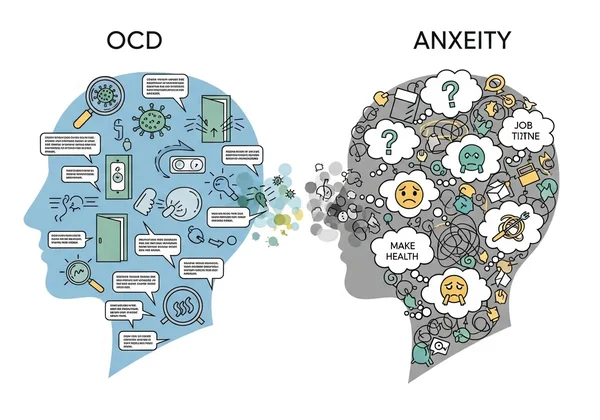
At first glance, Obsessive-Compulsive Disorder and Generalized Anxiety Disorder (GAD) can seem very similar. Both involve intense feelings of distress and worry that can interfere with daily life. However, the engine driving these feelings is fundamentally different for each condition. Understanding this core difference is essential for proper identification and support. It helps individuals recognize whether they're experiencing the repetitive, intrusive thoughts and behaviors characteristic of an obsessive-compulsive pattern, or the persistent, often unfocused worry that defines GAD.
Defining OCD: The Cycle of Obsessions and Compulsions
Obsessive-Compulsive Disorder is defined by a specific, powerful cycle. This cycle has two main parts: obsessions and compulsions.
- Obsessions are unwanted, intrusive, and repeated thoughts, images, or urges that cause significant anxiety or distress. These are not just everyday worries; they often feel irrational, persistent, and out of your control. Common themes include fears of contamination, a need for symmetry, unwanted aggressive thoughts, or doubts about safety.
- Compulsions are repetitive behaviors or mental acts that a person feels driven to perform in response to an obsession. The goal of the compulsion is to reduce the anxiety caused by the obsession or prevent a dreaded event from happening. Examples include excessive hand washing, repeated checking, mental reviewing, or arranging items in a specific order.
The key takeaway is that with this condition, the anxiety is a reaction to a specific obsession, and the compulsions are an attempt to neutralize that anxiety.
Generalized Anxiety: Worry Without Restraint
Generalized Anxiety Disorder (GAD) is characterized by persistent and excessive worry about a wide range of topics, events, or activities. Unlike the specific obsessions in an obsessive-compulsive cycle, the worry in GAD is often more widespread and free-floating. A person with GAD might worry intensely about their health, job, finances, and family, often all at once.
This worry is difficult to control and is typically disproportionate to the actual likelihood of the feared events. It is often accompanied by physical symptoms like restlessness, fatigue, muscle tension, and difficulty sleeping. The central feature of GAD is a state of constant, unfocused worry, rather than a specific cycle of obsession and compulsion. This means that while people with GAD experience significant distress, they don't typically engage in the ritualistic behaviors that are hallmarks of an obsessive-compulsive condition.
Symptom Comparison: OCD vs. Anxiety in Practice
Distinguishing between these conditions becomes clearer when you look at how the symptoms show up in your thoughts and actions. While both can be distressing, the nature of that distress is unique. Let's break down the practical differences in mental and behavioral symptoms.
Mental Symptoms: Intrusive Thoughts vs. Persistent Worry
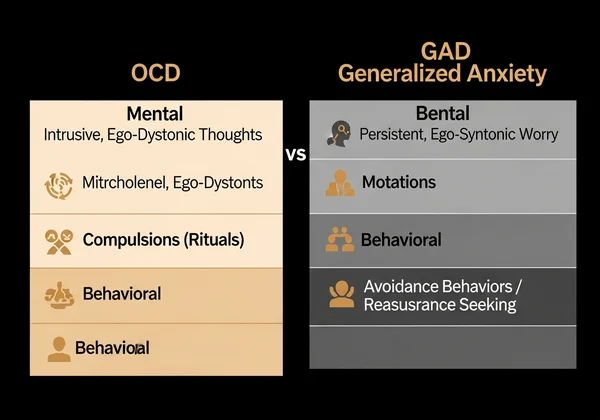
The mind is where the primary battle with both conditions takes place, but the internal experience is distinct. Someone with an obsessive-compulsive condition experiences intrusive thoughts that are often ego-dystonic, meaning they clash with their personal values and sense of self. For example, a kind person might have a terrifying, unwanted thought about harming a loved one. The thought itself is the source of intense fear and shame.
In contrast, the persistent worry of GAD is typically ego-syntonic, meaning the worries, while excessive, are usually aligned with the person’s values. Someone with GAD might worry constantly about their child's safety, their job performance, or paying their bills. These are legitimate concerns, but the intensity and duration of the worry are what define the disorder. The worry is the problem, not necessarily the content of the thought itself. To gain more clarity on your thought patterns, you can start your test for a preliminary assessment.
Behavioral Manifestations: Compulsions vs. Avoidance Behaviors
Behaviors are another area where the differences become obvious. In an obsessive-compulsive pattern, compulsions are the hallmark. These are ritualistic actions performed to neutralize the anxiety from an obsession. A person might check that the stove is off 20 times or wash their hands until they are raw. These behaviors are not logical or enjoyable; they are a desperate attempt to find temporary relief.
People with GAD, on the other hand, are more likely to engage in avoidance behaviors. They might avoid situations that trigger their worry, such as refusing to watch the news or procrastinating on tasks they fear they will fail. They may also seek excessive reassurance from others. While these actions provide short-term relief, they are not the structured, ritualistic compulsions seen with obsessive-compulsive symptoms.
The Overlap: When OCD and Anxiety Coexist
To make matters more complex, it is not always a case of "either/or." Many people experience symptoms of both conditions, a situation known as comorbidity. Understanding this overlap is vital for receiving an accurate picture of your mental health.
Understanding OCD-Anxiety Comorbidity: What the Research Shows
Research consistently shows that obsessive-compulsive and anxiety disorders frequently occur together. In fact, GAD is one of the most common co-occurring conditions for individuals with these challenges. When these conditions coexist, the symptoms of one can amplify the other. For instance, the constant background hum of generalized worry from GAD can make it harder for a person to resist their compulsions.
This overlap can make self-assessment difficult. You might recognize the widespread worry of GAD but miss the underlying cycle of obsessions and compulsions. This is why a structured evaluation is so important. An initial screening, like a confidential online OCD assessment, can help untangle these symptoms.
Common Misdiagnoses: Why OCD Is Often Mistaken for GAD
Obsessive-Compulsive Disorder is one of the most frequently misdiagnosed mental health conditions, and it is often mistaken for GAD. This happens because the intense anxiety is often the most visible symptom. A person might describe their overwhelming fear and distress, leading a clinician or themselves to conclude it is generalized anxiety.
However, this misses the crucial element of compulsions. Without asking the right questions about repetitive behaviors or mental rituals, the true cycle can remain hidden. This misdiagnosis can lead to ineffective treatment, as the most effective therapies (like Exposure and Response Prevention) are different from standard treatments for GAD.
Taking the Next Step: When to Seek Specialized Testing
If you're still feeling unsure after reading this guide, that's completely normal. The line between these conditions can be blurry. The next logical step is to gather more personalized information through a specialized screening tool designed to look for specific patterns of obsessive-compulsive symptoms.
Red Flags: Symptoms That Suggest OCD Over Anxiety
Consider taking a closer look if you notice any of these "red flags" that point more strongly toward an obsessive-compulsive pattern:
- Your worries are tied to specific, unwanted thoughts: You are more distressed by the thought itself than by a general sense of doom.
- You perform rituals to feel better: You have repetitive behaviors (physical or mental) that you feel you must do to relieve anxiety.
- Your anxiety temporarily disappears after a ritual: You feel a brief sense of relief after checking, cleaning, or thinking a certain way, but the urge soon returns.
- Your thoughts feel "alien" or against your character: The intrusive thoughts are bizarre, morally repugnant, or completely out of line with who you are.
If these points resonate with you, it's a strong indicator that your experience may be more aligned with an obsessive-compulsive condition than GAD.
How Our OCD Test Can Provide Clarity
Feeling uncertain is a heavy burden. An online screening tool can be a safe and confidential first step to lighten that load. Our free test is based on established psychological principles, like the Obsessive-Compulsive Inventory (OCI), to help you assess your symptoms.
By answering a series of targeted questions, you can receive immediate feedback on whether your experiences align with common patterns of obsessive-compulsive symptoms. The process is entirely private and designed to provide you with preliminary insights, not a diagnosis. These results can empower you with the clarity needed to have a more informed conversation with a mental health professional. If you are ready to understand more, you can try our free tool today.

Moving Forward: Understanding Your Next Steps
Conclusion: Your Path to Understanding Begins Here
Understanding whether you're dealing with an obsessive-compulsive pattern or anxiety can feel overwhelming, but you've already taken an important step by seeking information. These conditions have distinct characteristics that, once recognized, can guide you toward more effective strategies for managing your mental health.
Remember, you are not alone in this journey of discovery. Many people struggle with these overlapping symptoms and the uncertainty they bring. If you suspect your symptoms might be related to these challenges, don't stay in the dark. Take the next step on your path to understanding. Start your confidential OCD screening now to get scientifically-backed insights into your symptoms and begin your journey toward a clearer future.
Frequently Asked Questions About OCD vs. Anxiety
Can I have both OCD and anxiety at the same time?
Yes, absolutely. It is very common for people to have both conditions. This is known as comorbidity. Having both can make symptoms feel more intense, which is why getting a clear picture of what you're experiencing is so important for finding the right support.
How accurate is online testing for distinguishing OCD from anxiety?
Online screening tools, like the one offered here, are designed as preliminary self-assessment aids, not diagnostic instruments. Our test is based on scientifically validated principles (like the OCI) to identify patterns consistent with obsessive-compulsive symptoms. It can provide valuable clarity and indicate if a professional evaluation would be a good next step. To explore your symptoms, you can get started here.
What if my test results suggest OCD but I thought I just had anxiety?
This is a common experience. Because obsessive-compulsive patterns are often misunderstood, many people initially believe their symptoms are "just" severe anxiety. Receiving a result that suggests this is not a diagnosis but a helpful piece of information. It provides you with a new lens through which to view your experiences and empowers you to seek a more targeted professional assessment.
When should I consult a professional instead of relying on online testing?
An online test is an excellent first step for self-discovery, but it can never replace the expertise of a qualified mental health professional. You should always consult a doctor, psychologist, or therapist for an accurate diagnosis and treatment plan. Use the results from an online screening as a starting point to open up a more informed conversation with a professional.